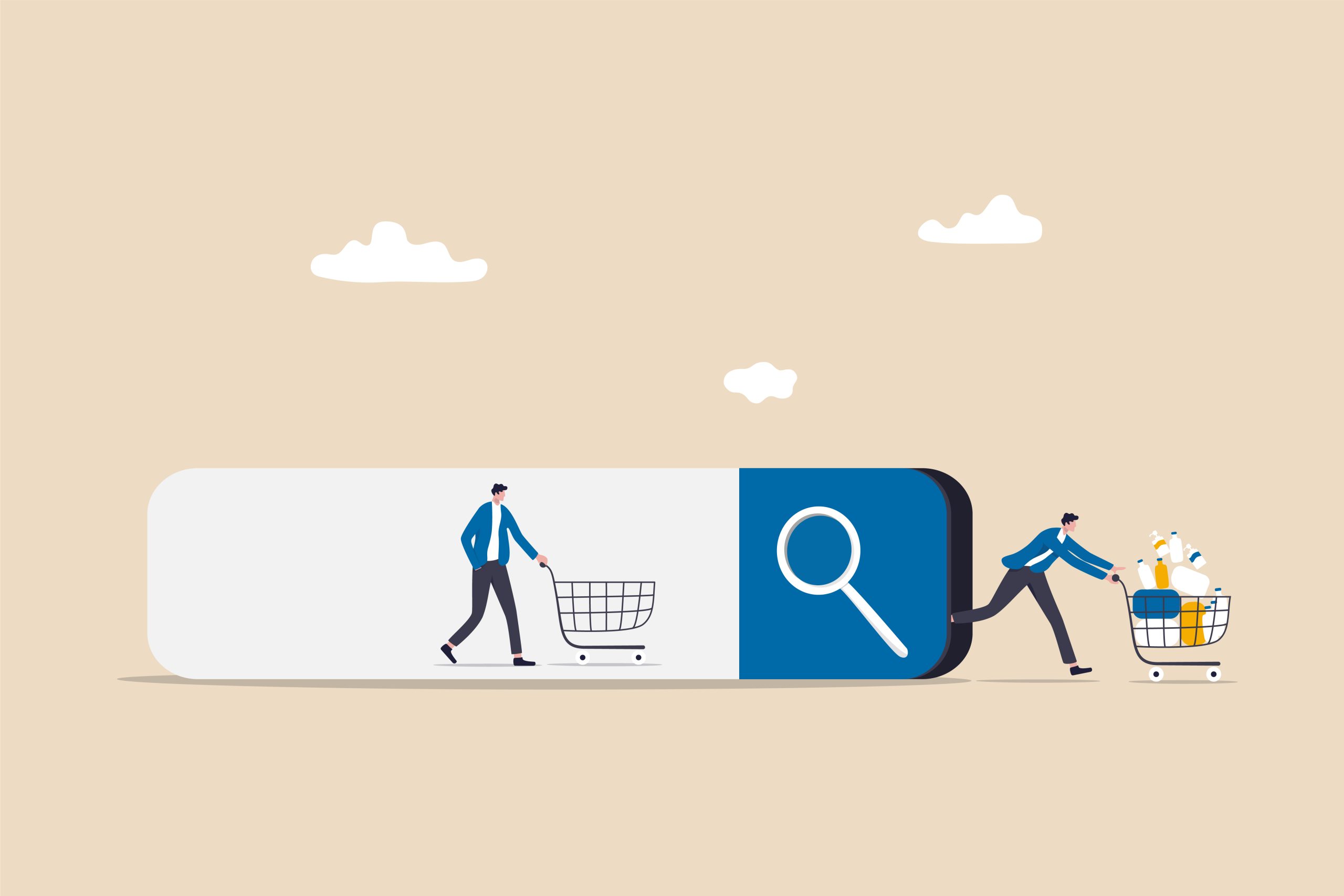
The mobile age has streamlined our daily lives. It’s to the point where waiting in lines, dealing with people, or even leaving the house feels like a hassle when you can just push buttons on your phone to accomplish what you need. Are we moving to a checkout-free environment?
Thanks to our smartphones, we’ve reduced the ability to shop, pay, travel and show proof of identity to a few taps, clicks or swipes. What used to feel foreign, or even scary, is now commonplace.
As marketers and developers we need to take 2 key lessons from what we’ve seen over the last few years:
- Things will surely continue to change – making things even more simple than they are today.
- All transformative enhancements start with a period of skepticism – which isn’t indicative of a bad idea as much as a major transformation that needs to be understood and managed wisely.
Let’s dig into these two areas and peek at what might be on the horizon.
A look back
Consider how major industries like retail, payments, transportation, and events have literally transformed through checkout-free technology on our phones.
- Retail: Amazon went from an upstart online bookseller to the world’s largest retail platform by streamlining the whole buying and delivery process. Amazon One-Click lets people shop, pay and deliver items with, well, one-click.
- Payments: PayPal and Venmo have rendered writing and mailing checks a prehistoric gesture, letting people send money for services, goods, or to pay back friends with a tap of a few buttons.
- Transportation: Uber and Lyft have likewise made hailing taxis a thing of the past. Why stand in the rain on a crowded street in New York City waiting to flag down an available yellow car when you can order one to your doorstep and pay for it with one tap?
- Events: Ticketmaster’s days of printing and mailing tickets are quickly coming to a close thanks to technology that simply sends you a digital file with a QR code that can be quickly scanned for entry.
Getting to checkout-free
Today, we’ve come to accept the ease and simplicity that all these disruptions have come to offer. But the reality is that it took a certain amount of trust and discomfort for us to get to that point. While Amazon’s 2-day shipping and One-Click certainly made things easier, people still needed to learn that the process would work. Before it became the norm, there was still a barrier of trust that existed. Would you be double billed? Would someone steal your credit card info? Would you actually get your stuff? Should you really be sharing your home address so readily?
Seasoned online shoppers (or younger adults) might scoff at these questions. But for many – these were legitimate concerns. And most of us had to hear a few success stories from people we trusted and/or experienced it ourselves before we adopted it as our norm.
The same is the case with other industries. The first time someone asked you to send money to them via PayPal, you likely had at least a tiny thought that someone would steal it and it would never get there. And how trusting did you feel the first time a stranger in an unmarked Uber pulled up and asked you to get in?
Disruption requires people to get uncomfortable
Disruptive technology feels uncomfortable when it’s new, and people aren’t accustomed to it yet. After all, it’s, well, disruptive. It takes us out of our comfort zone and makes us use—and trust— methods we aren’t familiar with or used to.
For example, we used to order and purchase exclusively in person or over the phone. This gives us the comfort of speaking to another human being that we inherently trust with our personal information such as our name, address, or credit card number.
Going checkout-free means letting go of those transaction processes we were comfortable with and volunteering private data we’ve gotten used to holding close: personal information, credit card numbers, address, and more. It means having to trust an unknown entity and a new technology.
It’s very different to type our private information—data we were trained to keep to ourselves for security reasons—into an app or web browser than it is in a 1:1 personal interaction. There’s the fear it may not be secure. Or maybe your order won’t get placed at all.
After you’ve done it a few times without any problems, though, it’s easy to start appreciating new technology benefits. The new process is quicker and easier. Plus, it can be done any time you have a spare moment, including outside of normal business hours.
Once you move past your discomfort, you accept the new technology, adopt it, and let go of the ways you operated before.
The continued evolution of checkout-free
Restaurants: We’ve already started seeing many continued evolutions of mobile accelerating check-out free. For example, food delivery via mobile in the United States doubled during the pandemic and is expected to continue to grow exponentially in the years to come. The pandemic required us to get outside our comfort zone and use a mobile app if we still wanted food from our favorite restaurants. And even as pandemic restrictions ease, you’ll likely see more and more restaurants moving to checkout-free even in-person. Don’t be surprised if it soon becomes commonplace to view a menu, order, and pay as we would from a food delivery app while we are sitting at a restaurant.
Gas: Increasingly, there’s change at the gas pump. Instead of sliding a credit card or touching a screen, we just tap an app or tap with our phone and then fuel up.
Hospitality: Mobile check-ins will become the norm where you won’t have to see the front desk. Just a few taps on your smartphone and you’ll walk right to your hotel room, use it to unlock the door, and go in. Same for car rentals.
The Phone itself: Let’s not think that our phones themselves won’t change. Our App and Play Stores, for example, will evolve to reduce friction. See an ad for an app you want? One tap on the ad and it’s yours – no reason to visit the store and leave what you are already engaged in. And for that matter, why do you need to see an ad for an app? Going back to our restaurant example where the menu, ordering, and payment are all on the app… instead of searching for the app or going to the store, don’t be surprised if one day the phone recommends the restaurant app once you sit down at the table. Then, with one quick tap it’s there on your phone ready to use.
Embrace the change, relish first move advantages
As digital transformation continues and more checkout-free transactions become available, we will eventually see fewer of the in-person transaction processes we’re accustomed to in our daily lives. We will continue to feel the discomfort of change, of course, of learning new systems and trusting new technology.
But as with everything to date, through experience, we will learn that the new technologies work well and can be trusted. We will begin to appreciate the benefits of going checkout-free. Over time, it will become our comfortable normal.
The companies that quickly navigate these new technologies will be industry leaders – like Amazon, Uber, and Venmo. The companies that hesitate risk falling behind.