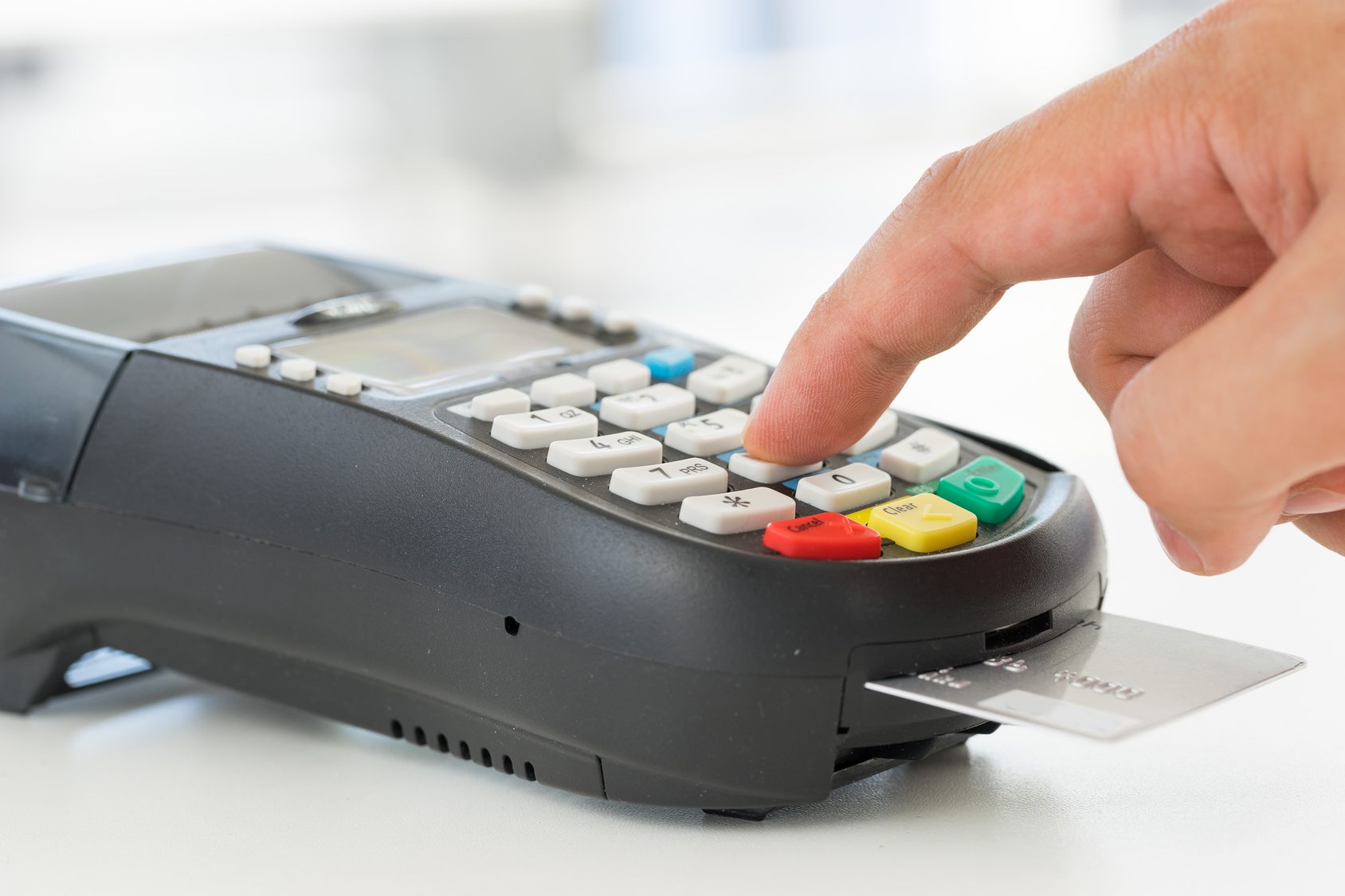
Credit card signatures are going away. You may have seen many articles about credit card signatures ending in the U.S. on April 13, and might wonder if it matters to you as a merchant. Ultimately, the decision on whether or not to accept signatures is up to you, so it’s important to understand the benefits of each option. In this article, I provide some insight into how and why credit card signatures are being phased out. Let’s start with the basics.
What’s happening?
Effective in mid-April, it will be optional for merchants to capture a signature on receipts in card-present retail transactions. This means that merchants won’t need their customers to sign any paper or digital receipts to complete a transaction. The rules vary by card brand, but they generally apply to transactions on the Visa, Mastercard, American Express and Discover networks.
This may raise several questions for merchants:
Why are card brands doing this?
The payments industry has been re-examining the value of signatures for several reasons.
Over half of card-present transactions are already being processed without signatures under small-ticket card brand programs. For higher ticket items, the original idea was that merchants could compare the signature on the card with the signature on the receipt to validate that the cardholder is the actual owner of the credit card. This put an unfair onus on merchants, as they are not handwriting experts, and customers often sign in a hurry on credit card receipts, making comparisons unreliable.
As technology advanced with options such as electronic signature capture and NFC/contactless on customer-facing devices, managing both paper receipts and digital signature images became cumbersome and problematic for merchants. Over time, it became clear that this unreliable and inefficient process was not meeting the needs for which it was intended.
How are the card brands implementing this?
Before we get into the “how” question, let’s look at what purpose these signed receipts have for both the customer and the merchant. The customer’s signature on receipts serves two functions:
- For the consumer, it is an acknowledgment that the merchant’s receipt is accurate.
- For merchants, the signed receipt provides “insurance” against a potential chargeback from the card issuer in cases where the consumer disputes the transaction.
All the card brands are implementing this in slightly different ways. American Express is removing signature requirement all over the world, whereas Visa is making it optional only in the U.S. on chip-enabled devices. Mastercard on the other hand, is only removing the signature requirement from U.S. and Canada and Discover is eliminating signature requirements in U.S., Canada, Mexico and the Caribbean.
The card brands are also removing the ability for issuers to chargeback based solely on signature validation. Other chargeback reasons remain unchanged.
Can merchants still collect signatures if they want to or if needed for other business reasons?
Yes, merchants can still collect signatures if they need to for any other business reasons. Some merchants, such as lodging, car rental, and dining businesses, as well as merchants that integrate sales contracts into their receipts, may choose to continue collecting signatures. However, they no longer have to accept them specifically for chargeback protection.
Do merchants have to change their payment applications?
In the long term, merchants should update their payment application to allow the option of not printing or displaying a signature line on receipts. In the short term, they can just tell customers they don’t need to sign.